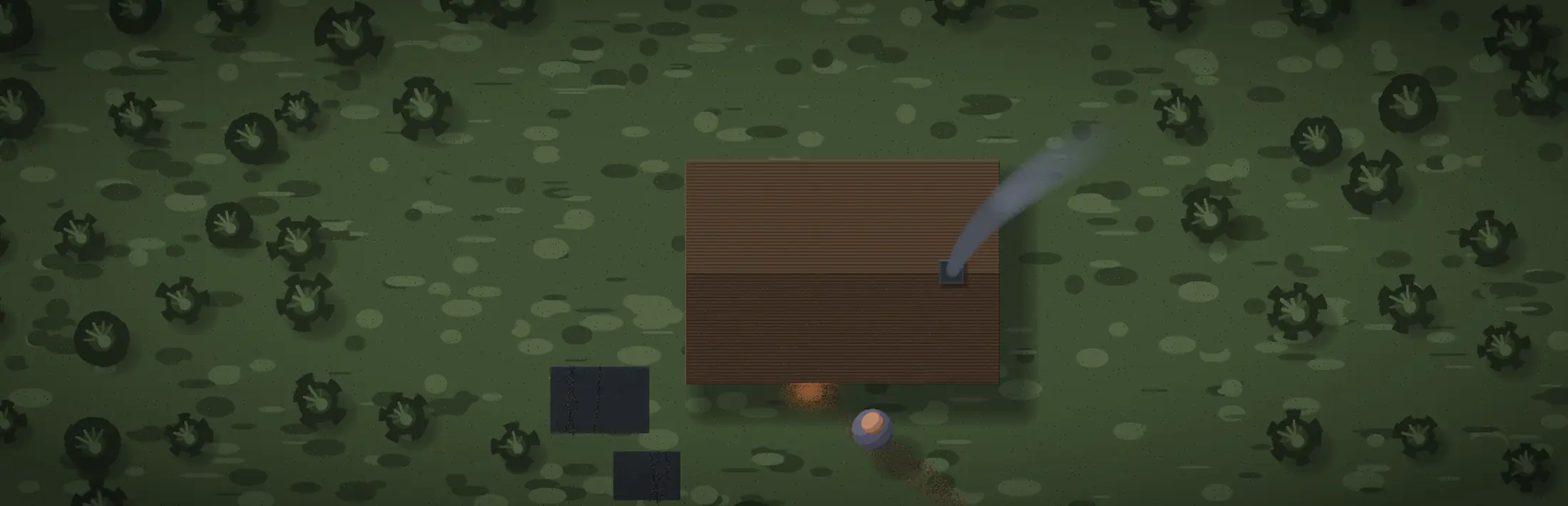

What it is
You wake on a road
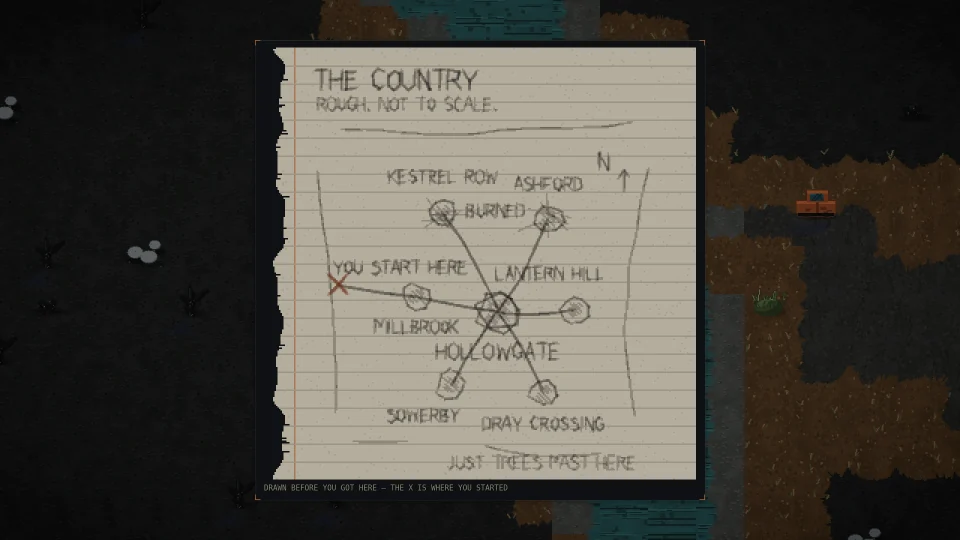
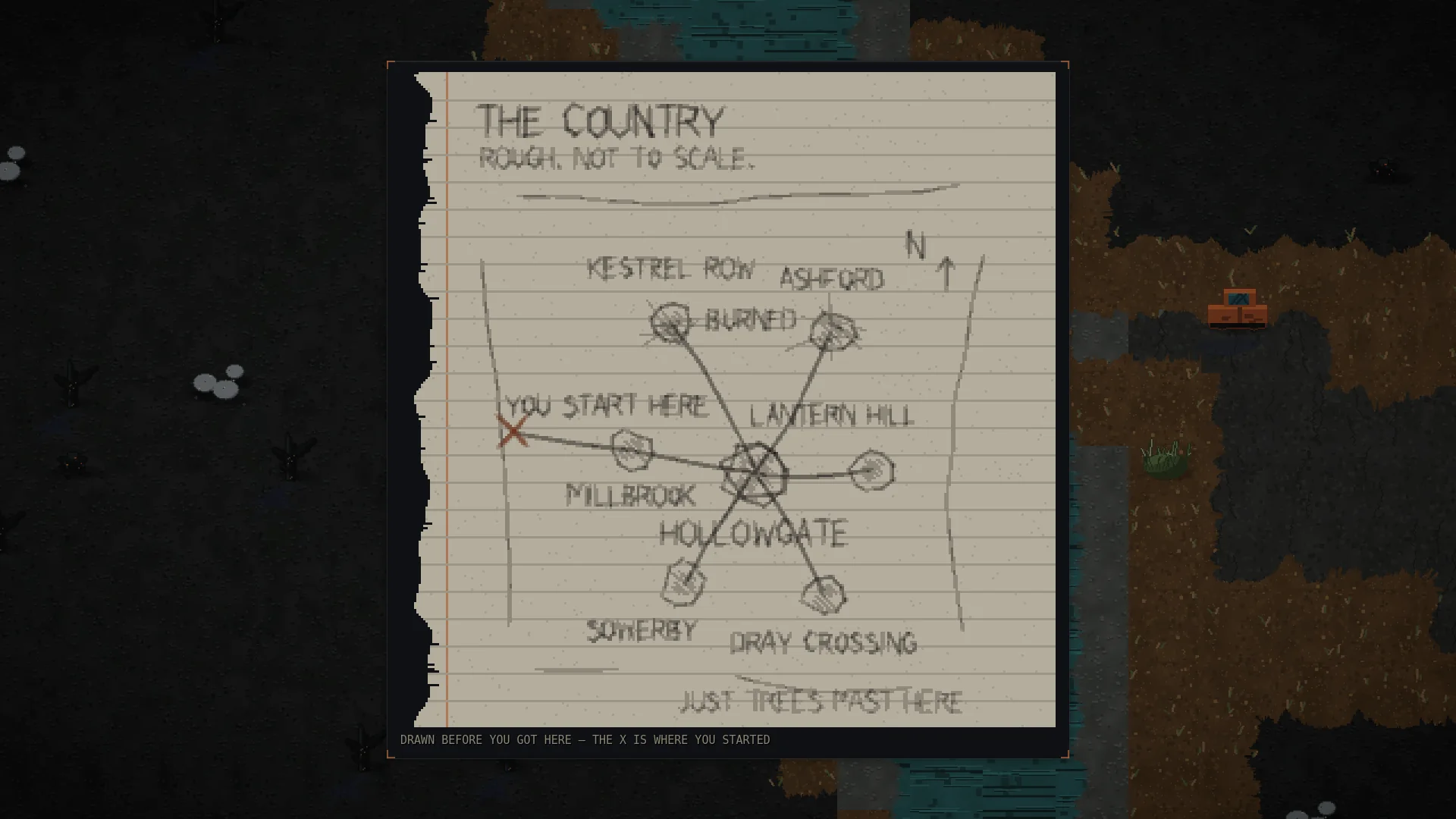
You wake on a road with a notebook, a hand-drawn map and nothing else. The map is honest about which side of the road a town is on and vague about how far away it is, which is what a map drawn from memory is like. North is where somebody said it was.
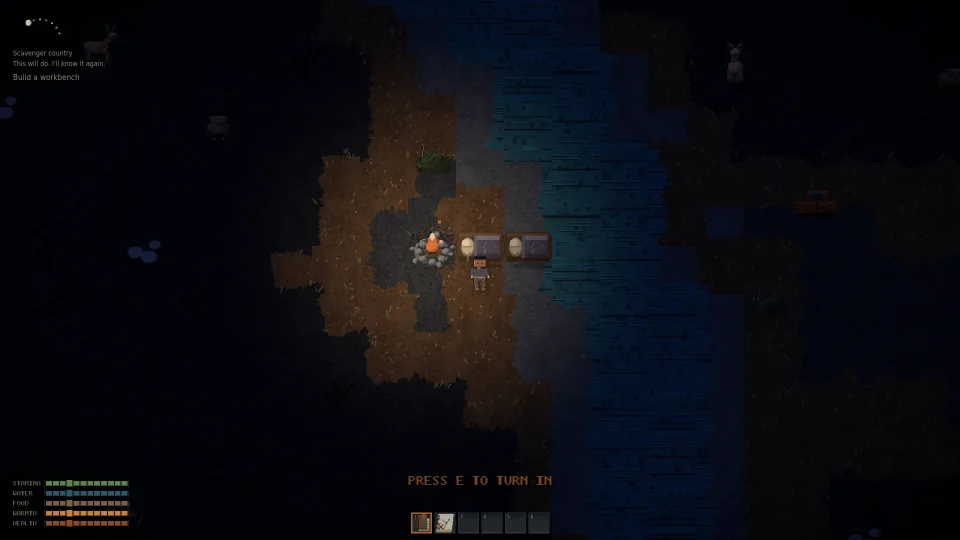
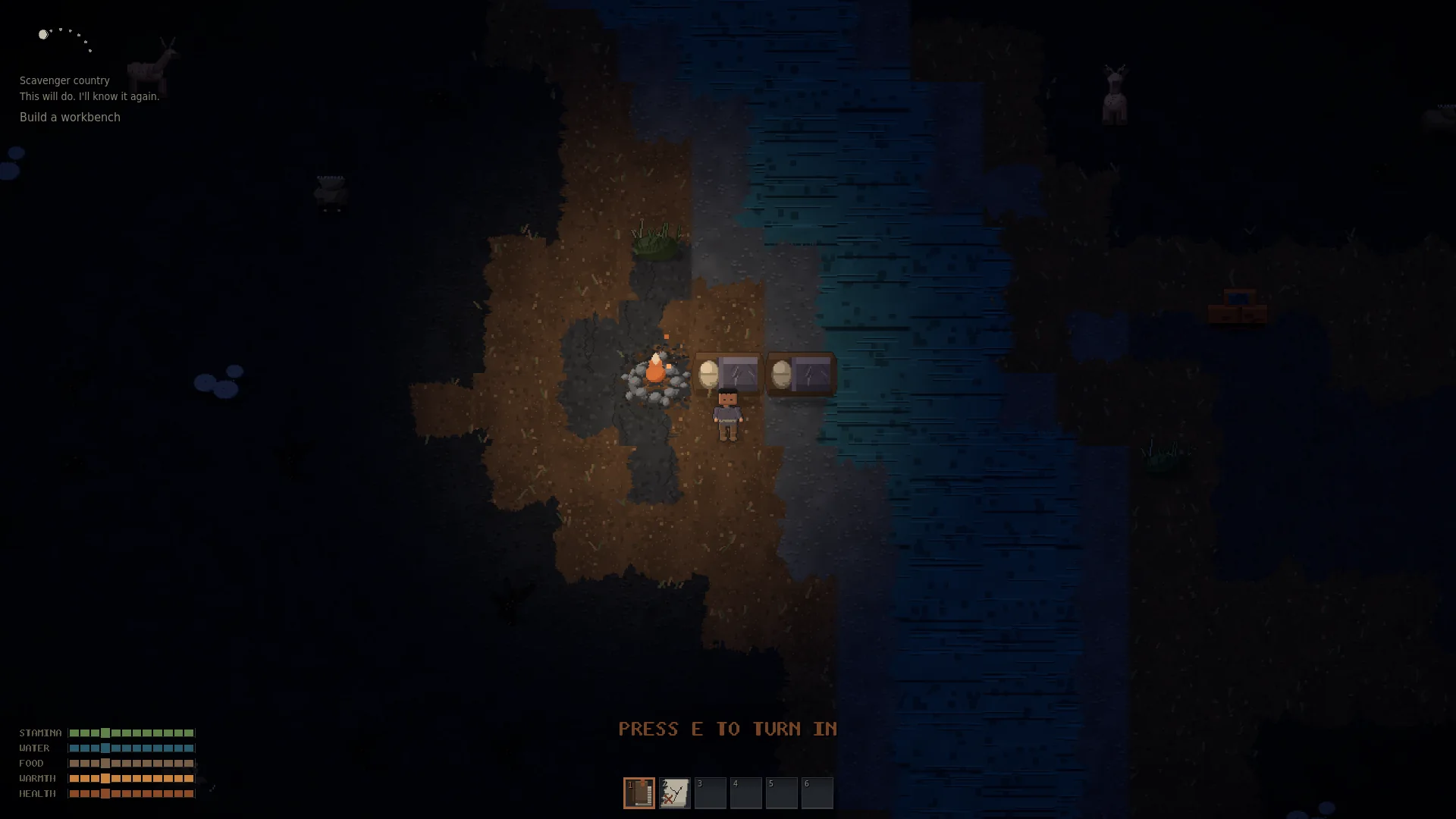
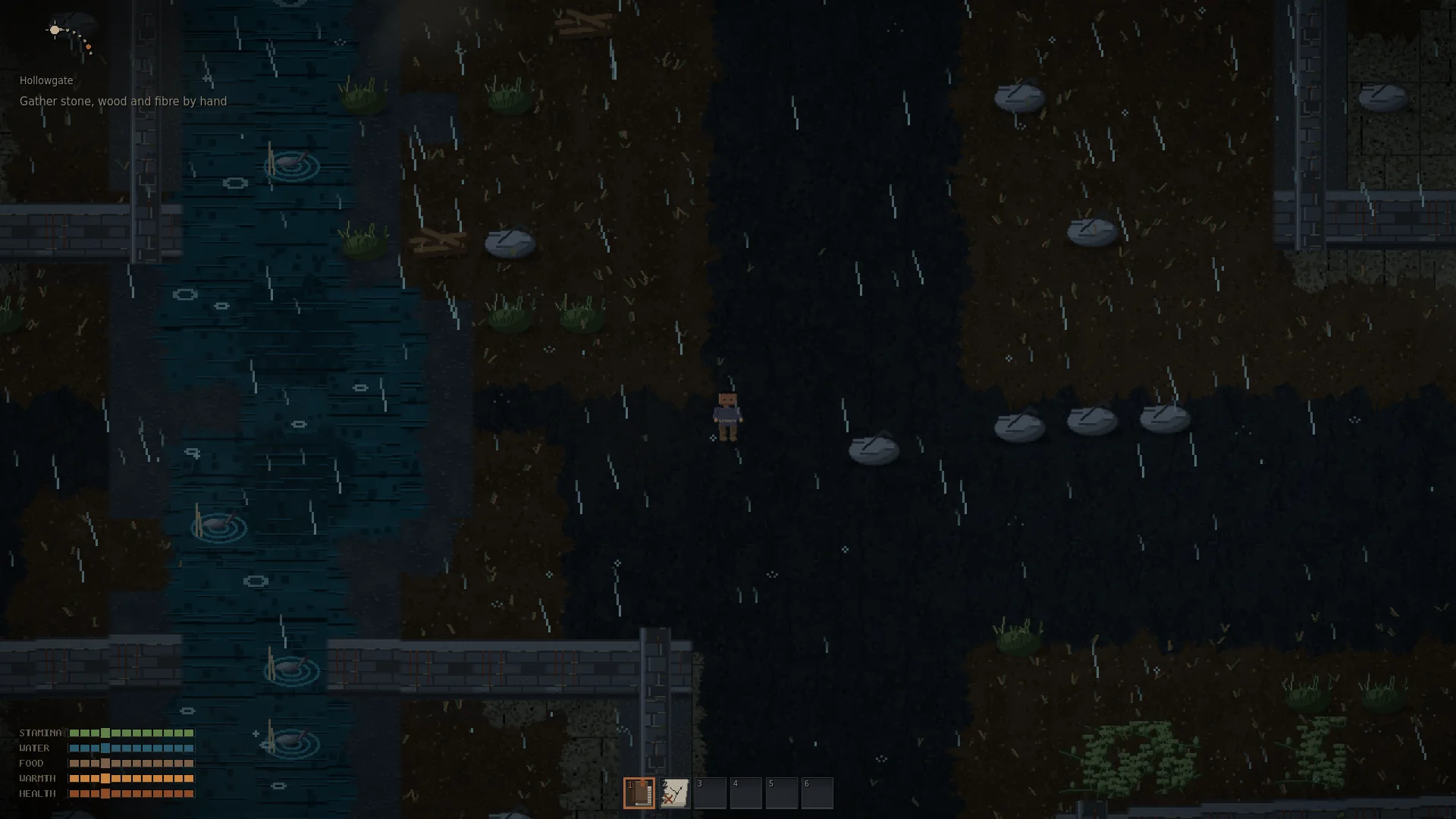
Stay alive first. Hunger and thirst are the easy part. Warmth is the argument — night, rain, a river you waded rather than walked around, what you are wearing and whether anything is burning near you. A hot meal is the cheapest answer to a cold night there is, and a fire that nobody feeds goes out.
Then build something worth coming back to. Work up from your hands to a stone axe, to a workbench, to iron, to a forge and steel. Knowledge is researched or found written on a schematic rather than unlocked by levels. Raise walls that pick a face or an end-on view from their neighbours, so a sealed room looks sealed.
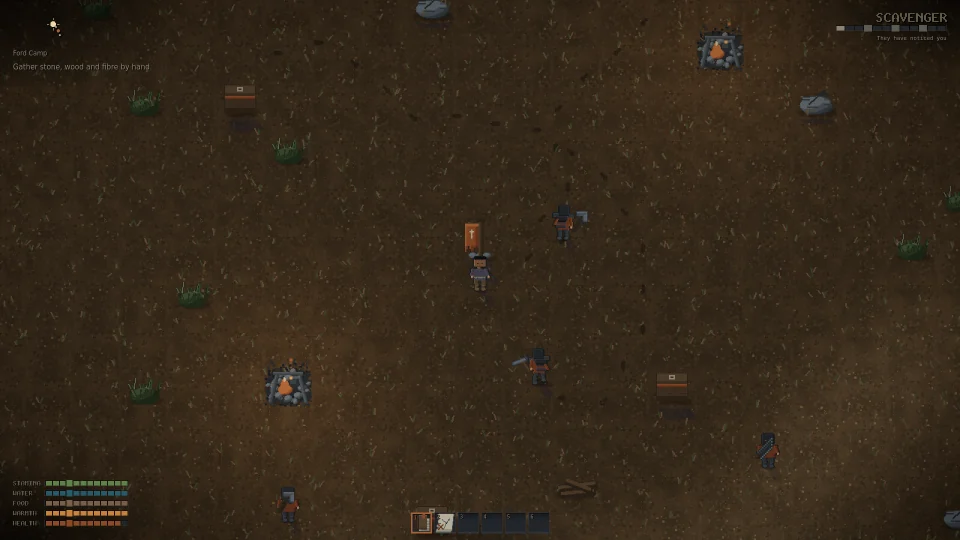
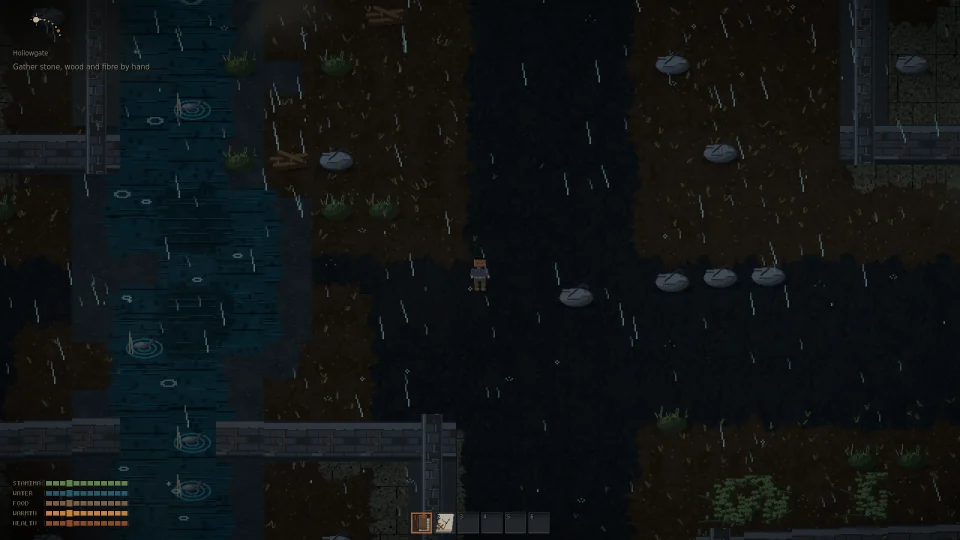
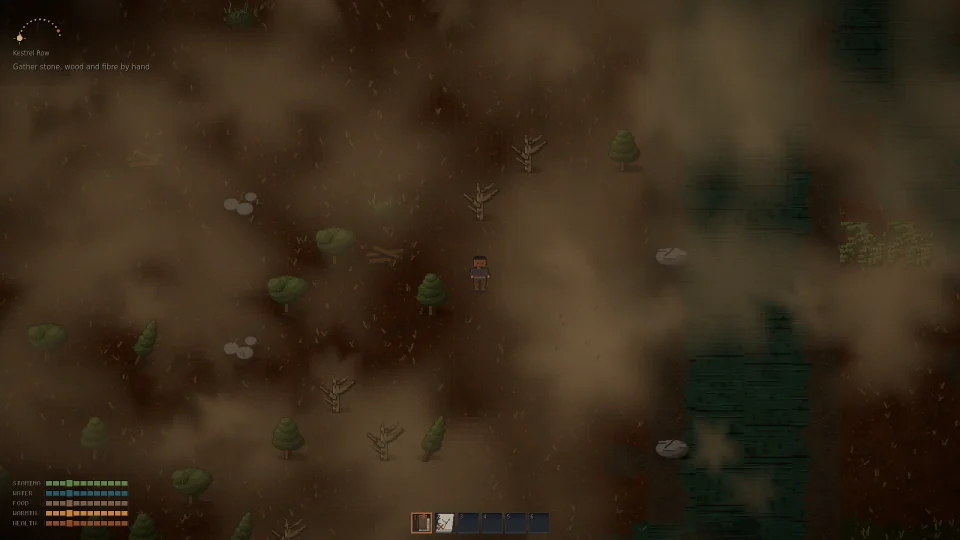
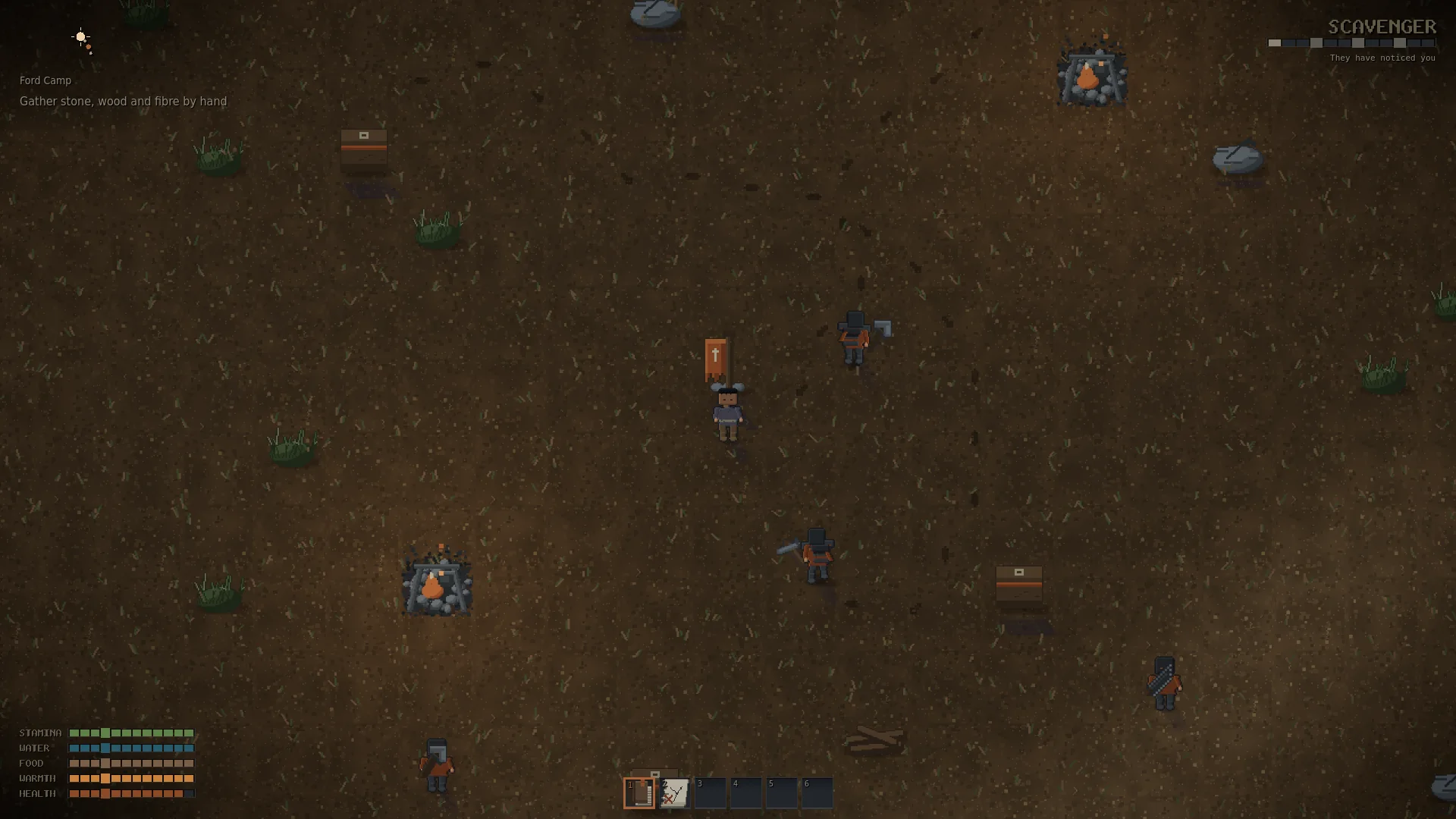
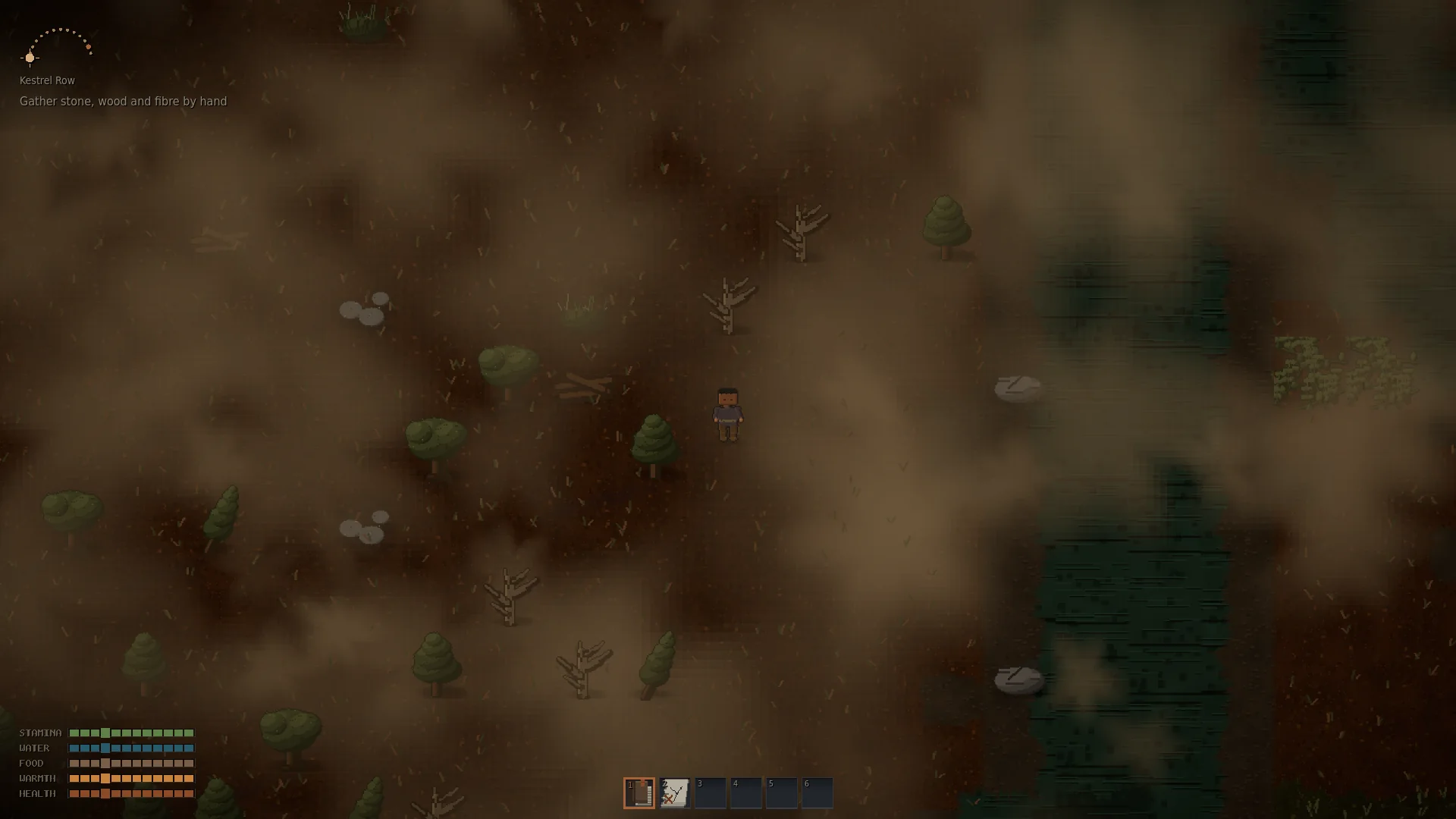
The threat is other people, and they keep count. Three factions hold the towns, and each keeps its own ledger of what you have done to it — provoke the Wardens and the Wardens come, and the Reapers stay where they were. Raiders hear you through anything and see you only in front of them. They arrive in parties that surround rather than queue, and they march on the camp you sleep in rather than on wherever you happen to be standing. A storm is cover, because weather masks noise and shortens sight for everybody.
Up to five, with nobody's address on the wire. Co-op runs over Steam's relay network: you join through a friend's lobby, and no player in the session ever learns another's IP address. One persistent world per save, hosted by whoever started it.
The road east ends two ways. Neither of them is the good one.
In the game today
What you can do
Survive
- Hunger, thirst, stamina, health — and warmth, which night, rain, deep water, what you wear and what is burning nearby all argue over.
- Hunt deer and boar that hear what you hear and answer being approached differently. One runs. One comes for you.
- Farm and cook. Food goes off, so a hoard is not a food supply — eat it, find tins, or build a larder that keeps it five times as long.
- Feed the fire or lose it. A dead hearth is neither warmth nor a place to cook.
Build
- Hands to a stone axe, to a workbench, to iron, to a forge, to steel — gated by stations rather than by levels.
- Research what you can work out, and find the rest written on schematics.
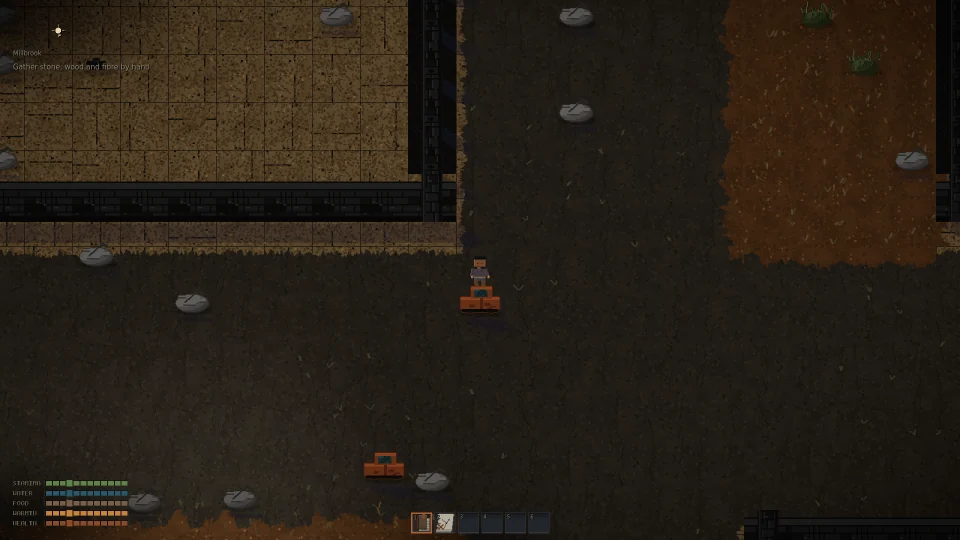
- Grid-snapped walls, doors, floors and stations, aimed with the pointer and laid in a run by holding the button.
- Storage, repair, deconstruction, upgrading a wall where it stands, and traps.
Fight
- Melee that is stamina-gated and decided by reach. You are downed and revived rather than killed, and bleeding out leaves your pack where you fell.
- A wooden club up to a steel machete, and three sets of clothing whose best armour is deliberately not its best insulation.
- Raiders that hear you through anything, see you only in front of them, and surround rather than queue.
- A per-faction ledger that rises when you are loud or violent, decays when you are not, and sends them at the camp you sleep in.
Together
- One to five players over Steam's relay. Nobody in the session learns anybody else's IP address.
- One persistent world per save, hosted by whoever started it.
- Point at something and your teammates see the mark.
- Doors and crates that know whose camp they belong to.
- Set the world up when you make it: raid pressure, predators, day length, regrowth, and what dying costs.
Captured in play
Screenshots
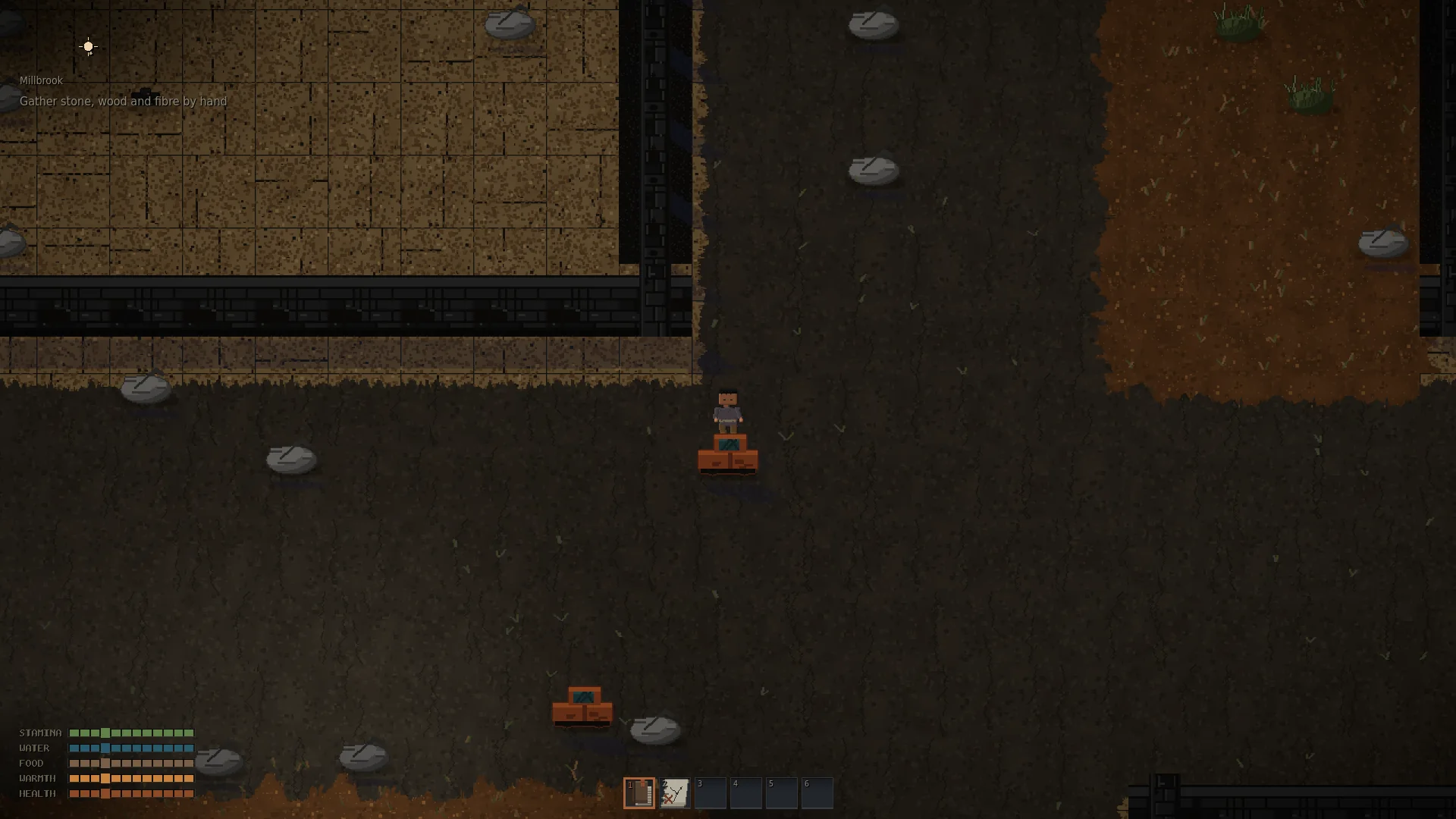
Where it is going
What's coming
Shipped
-
World options
Set a world up your way when you create it — raid pressure, predators, day length, regrowth, and what dying costs you.
-
Co-op pings & ownership
Point at things your teammates can see, and doors and crates that know whose camp they belong to.
-
Night predators
The dark stopped being merely cold. Bring a light, or bring a spear.
-
Sound & ambience
The world has a voice — ambient beds by biome and hour, weather you can hear coming, and animals that answer each other.
-
Sealed places
Bunkers from the evacuation years, behind a lock whose dials you have to work out. The best loot behind the worst doors.
-
Barter and notice boards
Trade with the people who hold the towns, and take the jobs they post.
-
The road east
Its first legs are walkable: the poles, the lantern, the post, the records, the city.
In development
-
World events
The world acting without you — wandering traders, a Reaper column on the move, herds crossing the road at dusk.
Planned
-
More to make
Depth past steel: recipes worth the walk, and tools that change how a day is spent rather than only how fast it goes.
-
More to do with the place you build
A camp you keep improving after the walls are up — comfort, storage that earns its floor space, and rooms with a purpose.
-
Faction consequences
Warden tolls, and the rest of what it means for a faction to want something from you beyond wanting you gone.
-
More world to walk to
The road east continues. New ground reached by travelling it, rather than by picking a map out of a menu.
Considering
-
Seasons
Winter that arrives instead of merely being spoken of.
-
Skills
Maybe. The game currently believes what you know and what you carry are the progression.
-
PvP
Unlikely. Aftergrowth is built as a co-op game first.
No dates. Things ship when they are ready.